Classic or modern kitchen: differences and the right worktop
Published on 5 November 2021 · Updated on 31 October 2026
According to Prowest's specialists, a classic kitchen has framed or routed fronts, decorative handles, glazed wall units and warm colours, while a modern one has flat, unornamented fronts, often without handles, and built-in appliances. The worktop follows the style: a classic kitchen suits marble-look quartz or ceramic with a profiled edge, a modern one suits plain, stone-look or concrete-look surfaces with a straight edge.
The differences at a glance
| Element | Classic kitchen | Modern kitchen |
|---|---|---|
| Fronts | Classic: solid wood or painted MDF, framed or routed. | Modern: flat and smooth, gloss or matt. |
| Handles | Classic: metal, decorative, often with an antique finish. | Modern: integrated profile, push-to-open or minimalist handles. |
| Colours | Classic: white, cream, light grey, deep blue or dark green, combined with white. | Modern: white, grey, black and natural wood, tone on tone or in contrast. |
| Wall units | Classic: glazed display cabinets, cornices. | Modern: flat units up to the ceiling, open shelving. |
| Worktop look | Classic: marble, Calacatta, warm-toned stone. | Modern: plain colours, concrete, stone or high-contrast marble. |
| Worktop edge | Classic: decorative profile (Ogee, Dupont) or an edge built up to 4 cm. | Modern: straight, either slim or built up with a straight profile. |
| Sink and hob | Classic: ceramic farmhouse sink or undermount sink. | Modern: undermount sink or one made from the worktop material, flush-mounted hob. |
The classic kitchen
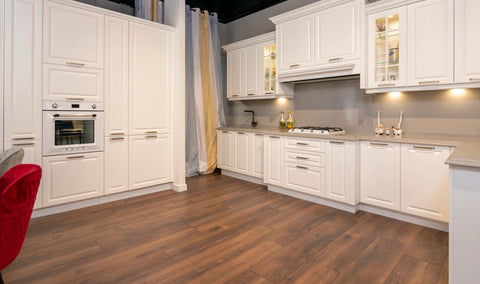
A classic kitchen is recognisable by its fronts: solid wood or painted MDF, framed or with routed patterns that look carved into the material. The details complete the picture: metal handles, often with an antique finish, cornices and wall units with glass doors.
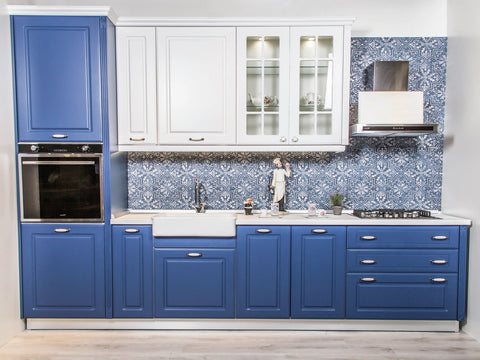
Classic does not have to mean white or cream. A deep blue, used on its own or with white, works well on fronts with simple lines; the exact shade makes the difference.
Which worktop suits a classic kitchen
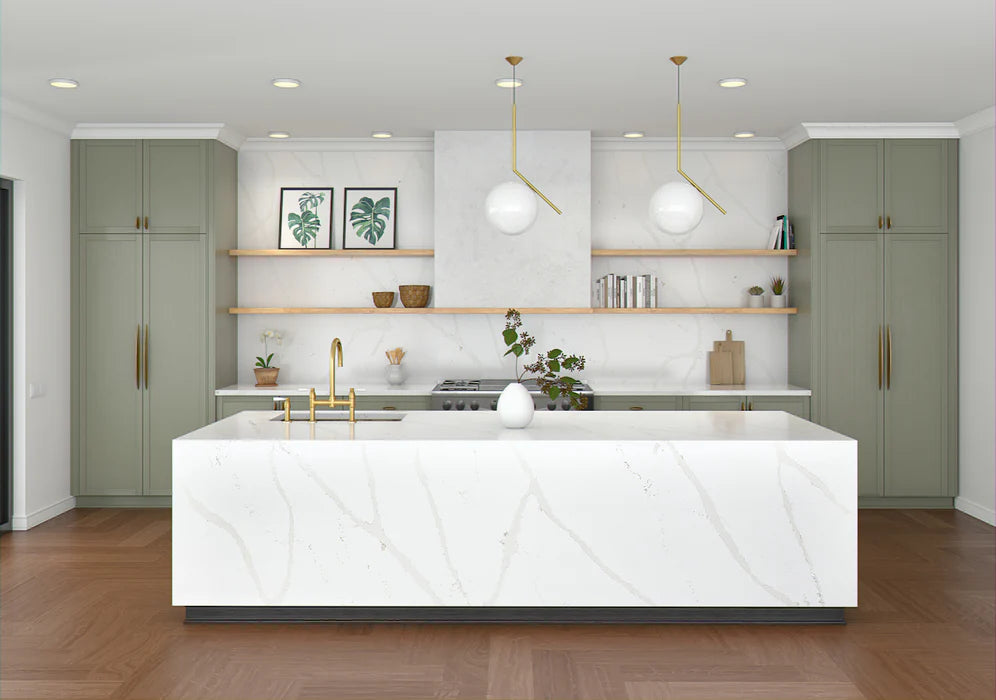
A marble look is the natural choice. The Prowest catalogue has 100 models of quartz kitchen worktops with a marble look and 56 models in the Calacatta style, with bold, contrasting veining.
The edge makes the biggest difference. Quartz is coloured through its whole body, so it can be profiled: Prowest fabricates 15 types of edge profile, from a plain straight edge to premium profiles such as Ogee or Dupont, including an edge built up to 4 cm by bonding a strip of the same material and water polishing. One example is the Smyrna 03 project in Bacău: Cimstone Smyrna quartz with a beige marble look and a 20 mm edge with a Premium Ogee profile, on classic furniture with white painted MDF fronts.
Sintered ceramic also suits the classic style, through its marble-look models. On many models the body of the slab is a different colour from the surface, so profiles are limited and the edge is built up by bonding. In a Prowest project in Bucharest, with Fondovalle Calacatta White ceramic on classic painted MDF furniture, the edge was built up to 40 mm by bonding, and the veining on the wall cladding continues onto the worktop and its edge.
The modern kitchen
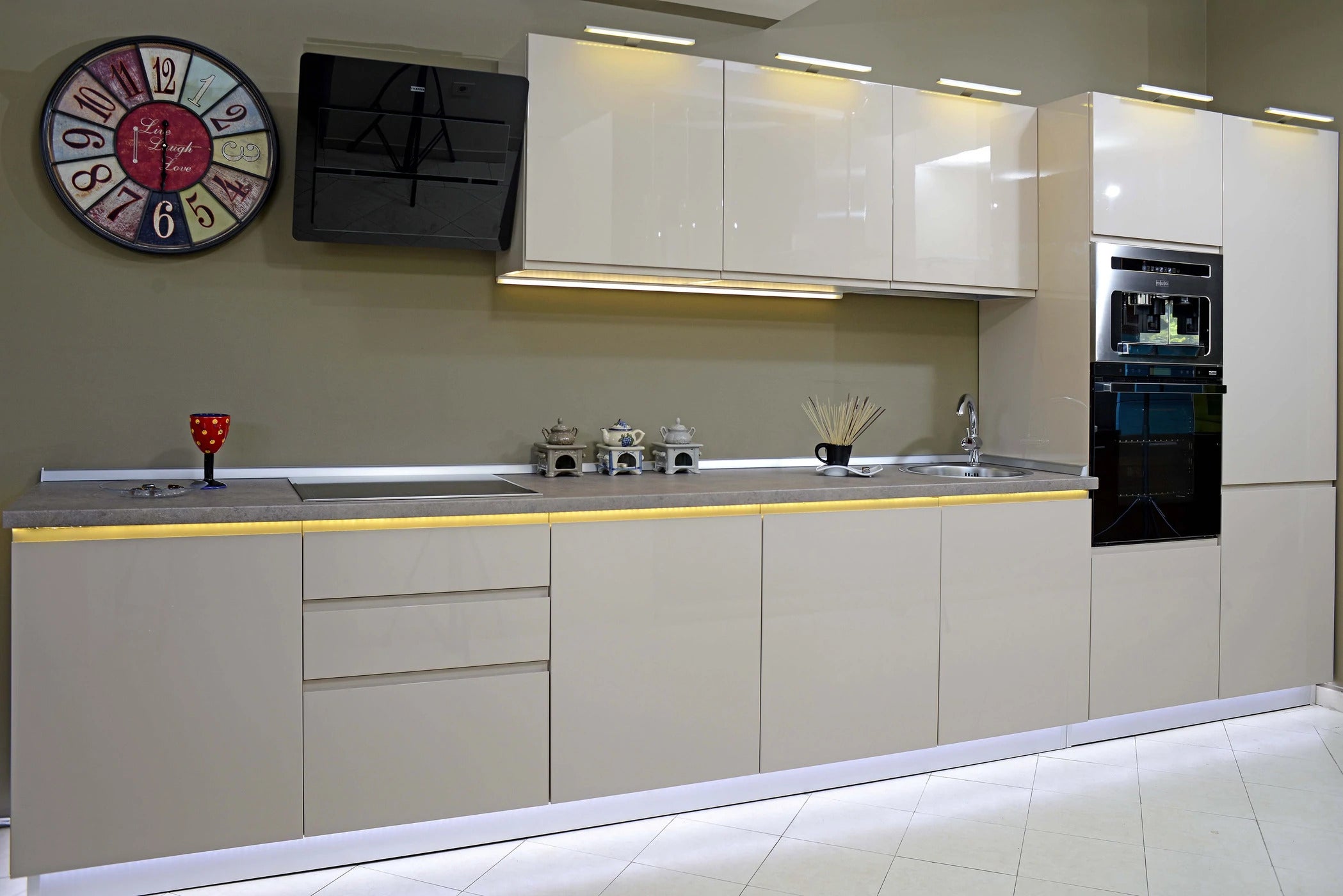
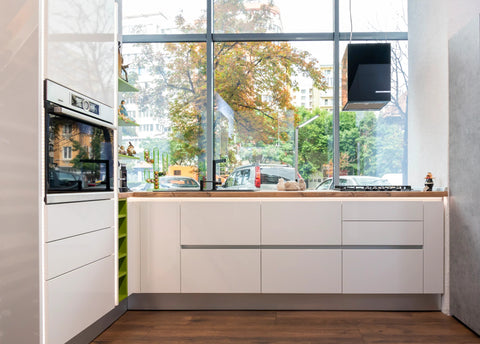
A modern kitchen is built on straight lines: smooth gloss or matt fronts without frames, opened by an integrated profile or by pushing, appliances built into tall units and cabinets taken up to the ceiling. The palette is limited: white, grey, black and natural wood, combined tone on tone or in contrast.
Which worktop suits a modern kitchen
Plain surfaces and stone-look or concrete-look surfaces emphasise straight lines. The catalogue has 25 models of plain-colour quartz worktops, and among the sintered ceramic worktops, 29 models are available in a matt finish, for example Fondovalle Portland Hood, a grey with a cement look. Ceramic at 1.2 cm gives a slim edge that suits light-looking islands; quartz at 2 cm with a straight edge stays understated.
In a modern kitchen, fabrication details matter even more than in a classic one. The project kitchen with worktop and cladding in black Marquina quartz brings them together: matt black quartz with white veining, a flush-mounted hob, an undermount sink in the same shade, full-height cladding with continuous veining and recessed sockets, next to white fluted fronts. In another project, in Snagov, matt Nuovocorso Absolute ceramic was used for the worktop, the island and the cladding between the units, with a 24 mm edge on the worktop and a 12 mm edge on the island.
Mixing styles: classic fronts, simple worktop
The two styles can be combined. In a Prowest project in Bucharest, classic furniture in pastel colours has a worktop in Cimstone Fuga quartz, a plain, glossy light grey, and two sinks in the same quartz, one of them with a front apron. Conversely, flat fronts can take a marble-look worktop. A simple rule: only one element with a strong pattern, whether the worktop, the fronts or the cladding.
Style and the price of the worktop
Style does not change the price directly. The price depends on the material, manufacturer, model and thickness, while profiled or built-up edges, cut-outs and cladding are calculated separately in the quotation. Starting prices by look in the Prowest catalogue:
| Material and look | Models | From (€/lm + VAT) |
|---|---|---|
| Marble-look quartz | 100 models | From 167,90 €/lm (1.086 lei/lm incl. VAT) |
| Calacatta-style quartz | 56 models | From 200 €/lm (1.294 lei/lm incl. VAT) |
| Plain-colour quartz | 25 models | From 161 €/lm (1.041 lei/lm incl. VAT) |
| Marble-look ceramic | 25 models | From 206,25 €/lm (1.334 lei/lm incl. VAT) |
| Stone-look ceramic | 11 models | From 242 €/lm (1.565 lei/lm incl. VAT) |
These are the prices shown on prowest.ro in November 2026, excluding VAT, and they may include current promotions; lm stands for linear metre. The full calculation, with examples, is in the kitchen worktop price guide.
Prices in lei include 21% VAT, at the NBR exchange rate of 11.11.2026 (€1 = 5,3460 lei).
Frequently asked questions
Which edge suits a classic kitchen?
A decorative profile such as Ogee or Dupont, or a straight edge built up to 4 cm, which gives the worktop visual weight. On quartz, all 15 profiles in the Prowest range can be made; on ceramic, the edge usually stays straight and is built up by bonding to 2.4 or 4 cm. The profile is chosen during the consultation, to match the fronts.
Does a ceramic worktop work in a classic kitchen?
Yes, especially the models in the Prowest catalogue with a marble, Calacatta or warm stone look. The difference from quartz lies in the edge: elaborate profiles are not possible, because on many models the body of the slab is a different colour from the surface. On the other hand, ceramic withstands heat because it contains no resin.
Which worktop suits a white kitchen?
For a bright, tone-on-tone look, Prowest's specialists recommend a white or cream worktop with fine veining; for contrast, a dark grey, black or concrete-look worktop. Next to white gloss fronts, a matt worktop reduces reflections, while next to matt fronts a gloss worktop brings in light.
You can see the materials in the Prowest showrooms at Str. Doina 9, Sector 5, and at Expo Top Construct, Valea Cascadelor 23, stand B4–B5, Bucharest. For a recommendation for your project, contact us.