With what and how to clean kitchen furniture?
Publicat pe 28 May 2026
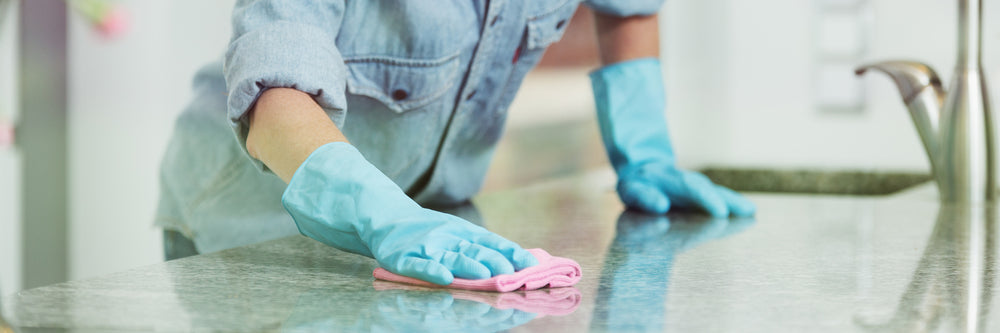
Preparing food and dining in the kitchen inevitably leads to dirt, stains, and even unpleasant odors. For the kitchen furniture to maintain its appearance and durability for a long time, we must pay special attention to the maintenance process, especially its correct cleaning.
Of course, by choosing furniture pieces made from durable materials from the very beginning, the risk of them being affected by dirt and stains will significantly decrease. Also, to ensure the longevity of the furniture, it is recommended to opt for quality cleaning products, selected according to the specific characteristics of each type of material they will come into contact with.
What happens if we don't clean kitchen furniture correctly?
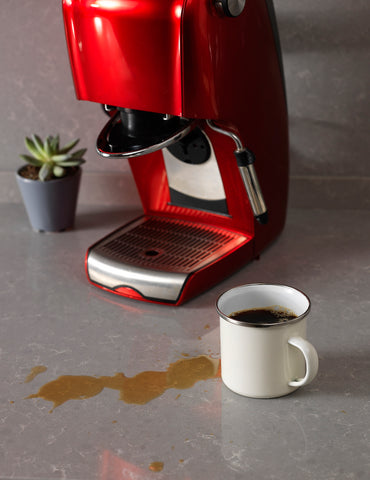
Unfortunately, many people do not pay due attention to the kitchen furniture cleaning process and choose to use products they have at hand or even postpone wiping stains, thus allowing them to dry. Both behaviors are completely wrong.
In the first case, using unsuitable cleaning products can lead to deep and irreparable damage to surfaces, meaning that the furniture will become unsightly and non-functional, and as such, important parts of it will need to be replaced or repaired (if this is still possible). In the second situation, namely when stains are negligently left to dry, a much greater subsequent effort is required to remove the dirt.
Moreover, regardless of whether the kitchen furniture is corner-shaped, with or without wall units, made in a contemporary or classic style, in shades of white, beige, or more sober ones, cleaning after each use will contribute to maintaining its beauty for as long as possible.
To avoid the aforementioned situations and to continue enjoying the special appearance of your kitchen, it is very important, as we mentioned at the beginning of this article, to pay due attention to choosing quality materials for the worktop and furniture.
For example, in our portfolio, you will find durable materials, characterized by a high capacity to withstand both dirt and very high temperatures. You can discover them all here.
How to correctly maintain kitchen furniture?
You should know that, depending on the type of kitchen furniture and its placement, the cleaning technique will be slightly different. For example, in the case of furniture and a worktop made entirely of wood, you will need to be very careful with the amount of water you use, because wood is a material sensitive to humidity. The same rule applies to colored furniture, as the intensity of its shades can be diminished by using unsuitable products.
Furniture produced and sold by Prowest is intended for domestic use, thus it cannot be used in industrial environments. Therefore, cleaning procedures must be effective, but not overly aggressive. Keep the following in mind during the cleaning process:
- avoid cleaning the furniture more often than necessary, otherwise you risk damaging its surface;
- for stain removal, use cleaning solutions recommended by the manufacturer, avoiding the use of knives or other sharp objects, especially on glossy surfaces;
- periodically wipe water from the furniture around the sink and the worktop (as these are the most prone to moisture);
- avoid placing hot objects directly on the furniture;
- try, as much as possible, to control the humidity level in the kitchen (moisture can negatively affect the furniture);
- avoid exposing it to direct sunlight for too long, as it may lose its shine;
- during the cleaning process, use only water-soluble substances, whose labels clearly specify safety for use on melamine or paint;
- use only soft cloths that do not scratch;
- avoid cleaning agents with a very high pH, such as detergents for grills, ovens, or dishwashers.
How to correctly maintain the kitchen worktop?
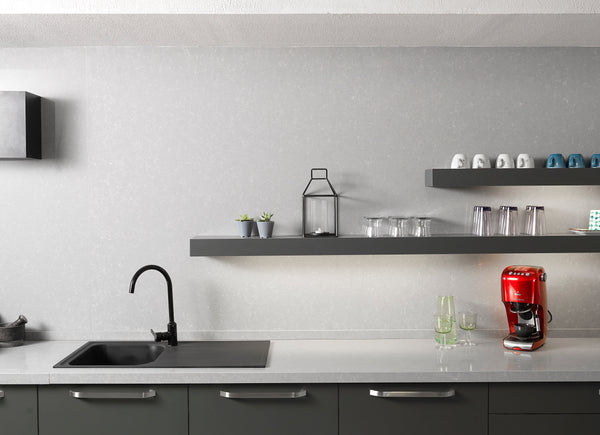
Regarding worktop maintenance tips, we will consider grouping them according to the material they are made from:
Composite quartz worktops
In the process of maintaining a worktop made of composite quartz, we recommend keeping the following in mind:
- for light dirt, it is sufficient to use a damp cloth and liquid detergent, then wiping away any detergent residue with warm water;
- the use of abrasive and very acidic substances with a very high pH should be avoided, as these can interact with the resins found in the composition of quartz;
- for hardened stains, a spatula can be used, but only if it is plastic, and as soon as the stain has been scraped off, the residues can be removed with water and a soft cloth;
- only commercial cleaning agents whose labels clearly state the recommendation for kitchen worktops should be used;
- the use of cleaning agents containing bleach should be avoided.
Beware of hot trays and pots! It is forbidden to place them directly on the worktop surface (quartz is only resistant to moderate temperatures, up to 100 degrees Celsius). In the case of hot trays, thermal shock can cause cracks.
Porcelain ceramic worktops
A great advantage of porcelain ceramic is its increased resistance to stains and scratches. But its biggest asset is its resistance to high temperatures! Yes, in this case, you can safely place hot trays directly on the surface.
Furthermore, porcelain ceramic is not affected by cleaning with common substances, being an inert, very resistant material.
We recommend keeping the following in mind when maintaining a worktop made of porcelain ceramic:
- the use of abrasive cloths/sponges and solutions should be avoided;
- the use of solutions based on fluorine and quartz sands should be avoided, using silicone-based cleaning agents instead;
- the use of sharp edges/ceramic knives should be avoided, as they can still leave subtle marks on the surface;
- only soft sponges/cloths and lukewarm water should be used;
- the only permitted solutions are universal ones (household solutions/detergents);
- for difficult-to-remove dirt, a biodegradable oil-based solution will prove very effective.
As a final tip, we recommend not letting stains dry, but cleaning them immediately after they appear, then using plenty of water. Subsequently, they will be harder to remove and may even cause you to resort to sharp objects for cleaning.
Moreover, we advise you to choose the best quality materials for your kitchen, so that the maintenance of the furniture and the worktop is as easy as possible. The same tips apply to appliances and furniture handles.
Other articles